


I had lunch with a friend a year or so ago who had been reading my Alone Rangers articles. He was kind enough to say he had passed one or two on to a friend he thought was struggling and who would find the messages in the articles useful. I was also touched when someone else said, “Hey, I really liked that article, and it resonated with me, so I sat down with my wife and talked it through.”
I’ve always said that I primarily write for myself, that this is my therapy. This is about me learning about myself and, through that, hopefully leading a better, stronger, more confident life and a more caring life with the people around me. It’s not about accolades, awards, or subscriber numbers, but there is a touch of ego in here, so those occasional bits of feedback from people are extremely motivating.
But it's struck me that knowing something isn’t the same as doing it. Knowledge isn’t wisdom, and it doesn't guarantee you’ll take action or implement change in your world.
Natalia Talkowska, a communications strategist who speaks to brands about the neuroscience of storytelling, put it bluntly to a room full of marketers at Native Advertising Days in London earlier this year.
“In my experience, information rarely changes anything about what we do. Most of you will leave this room and do absolutely nothing about the whole thing tomorrow.”
Natalia absolutely pushed a button with me when I saw the video. Just because I’ve had a thought or somebody has said something to me, and that’s prompted me to research and write an article, doesn’t always mean I’ve taken it to heart, even though that’s generally my intent. Seeing her talk was a bit of a wake-up call, because it’s made me wonder: am I really embodying all the ideas I’ve written about so often?
If I look back through all my Alone Rangers articles, at the end of the day, they are mostly information. I push it out to the world with no expectations beyond hoping that a few people find it useful. When I hear back from people on occasion about how I’ve pushed a button, prompted them to rethink something, or had a conversation with their wife, it’s quite affirming.
If you're in the middle of this yourself, you're not alone. Plenty of us know exactly what we should do about loneliness and still haven't done it. I write about loneliness, friendship and the gap between knowing and doing most weeks. Subscribe to get the next one.
Loneliness isn’t something you solve simply by knowing things. You need to make change. The change won’t come to you; you need to change. Natalia went on to name what does shift behaviour.
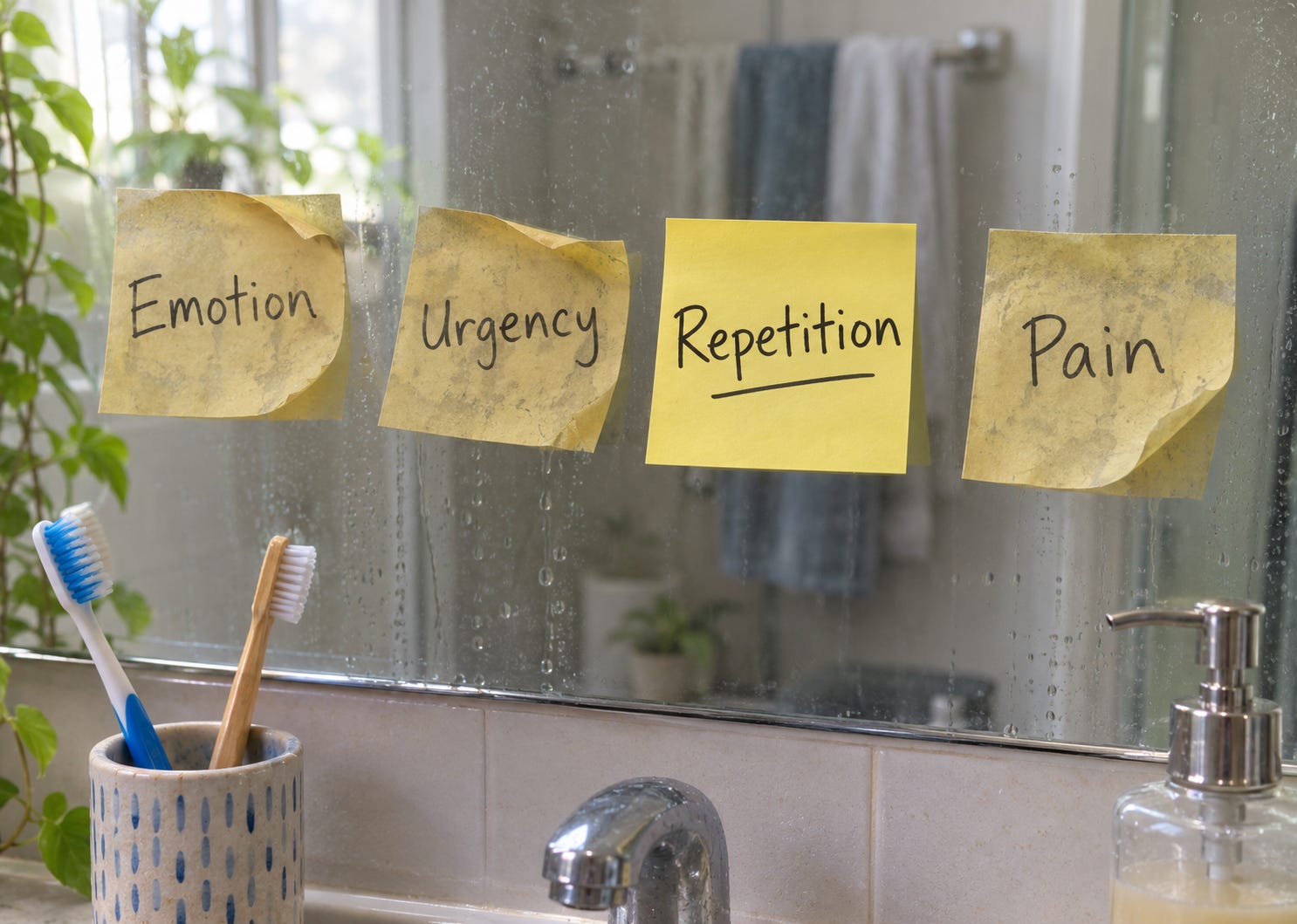
“What does change the behaviour? Emotion, urgency, repetition, and pain.”
I’ve been wondering which of those four things my writing can supply. I think emotion and repetition, perhaps, whereas urgency and pain, probably not, other than where I’ve reflected on previous parts of my life and felt discomfort.
Wendy Wood, a psychologist at the University of Southern California who has spent decades studying habit, found the same gap Natalia talks about. Most of the people she surveyed said they understood how habits work, yet very few had managed to change one, and her verdict was blunt.
“So whatever people are understanding is not helping them.”
What she says does work is plainer than I expected.
“Habits are a learning mechanism. All we have to do is repeat something and get rewarded for it, and we’re learning a habit.”
There’s no question that writing repeatedly about a topic such as loneliness, exploring it from different angles, creates repetition that can shift my behaviour. That actually then makes it interesting to me, because if urgency and pain are what might finally shift most men, perhaps writing isn’t the path forward for that.
Then again, I’ve never suggested that my writing is the only thing that will bring about change in me. Other actions, such as therapy, reading, and spending time with other men and with my wider friends group, all contribute to my progress.
So I don’t think the answer is to stop writing, or to pretend an article can do the work that pain does. If repetition is the lever writing can pull, then each piece is a cue, and the change has to happen in what I do afterwards and keep doing. The one habit I’ve definitely developed is staying in touch with people, which is no small thing for someone with a procrastination gene.
If any of this rang true, pick one person you’ve been meaning to get in touch with and do it this week, then do it again the week after.
DO YOURSELF A FAVOUR
That was Molly Meldrum’s line, and it still holds up. You’re reading Alone Rangers for free, that’s not changing. But a paid subscription keeps it free for everyone else and puts a few dollars behind work that’s trying to say something true about loneliness and connection.