


I’ve been thinking and writing a bunch lately about how we filter and curate our outward-facing persona based on the circumstances.
For example, we often will avoid voicing the truth for fear of being penalised as a scapegoat. This endless hiding of parts of yourself can be exhausting. I saw this in my Substack Notes this morning from another Melbourne Substacker, @soniaclarke:
“Try this: describe yourself like you would at a work event. Now at a barbecue. Now in your eulogy.
Notice how different those three versions are?
That gap is where your real identity lives.”
Sonia nails it in three example situations. Most of us carry an internal editor; we monitor our tone and words, sometimes swapping out a ‘difficult’ opinion for something more palatable for that particular audience.
I spent five years commuting to and from San Francisco for a contract job. Each time I walked off the plane, I had to remember to plug in the correct dictionary:
Boot = Trunk
Thongs = Flip Flops
Lift = Elevator
In a way, this is the same thing, adjusting my language to ‘fit in’ with the people around me. I would tell myself that using Americanisms was just being polite. I’ll acknowledge this was simply to make myself understood rather than to protect myself.
If we are editing for safety because we fear creating friction, then how can we justify this as etiquette? In my article ‘The Quiet Exhaustion of Keeping Parts of Yourself Hidden‘, I make the point:
“The most exhausting thing is not hiding who you are, but carrying the constant awareness that you are doing it.”
It’s taken me a long time to realise the exhaustion I so often felt at the end of a long workday wasn’t from doing my job; it was the manual labour of self-monitoring.
There is a real cost to this habit. When we constantly suppress our authentic impulses, we are burning through our mental reserves. We talk about “holding our tongue” as a metaphor, but it’s a distinct physical and mental effort.
The big trap is that you are garbling your connection to others. They hear a faux version of you, and a percentage of your energy is given over to maintaining the facade. Some sensitive people will pick up on this - does this cultivate distrust?
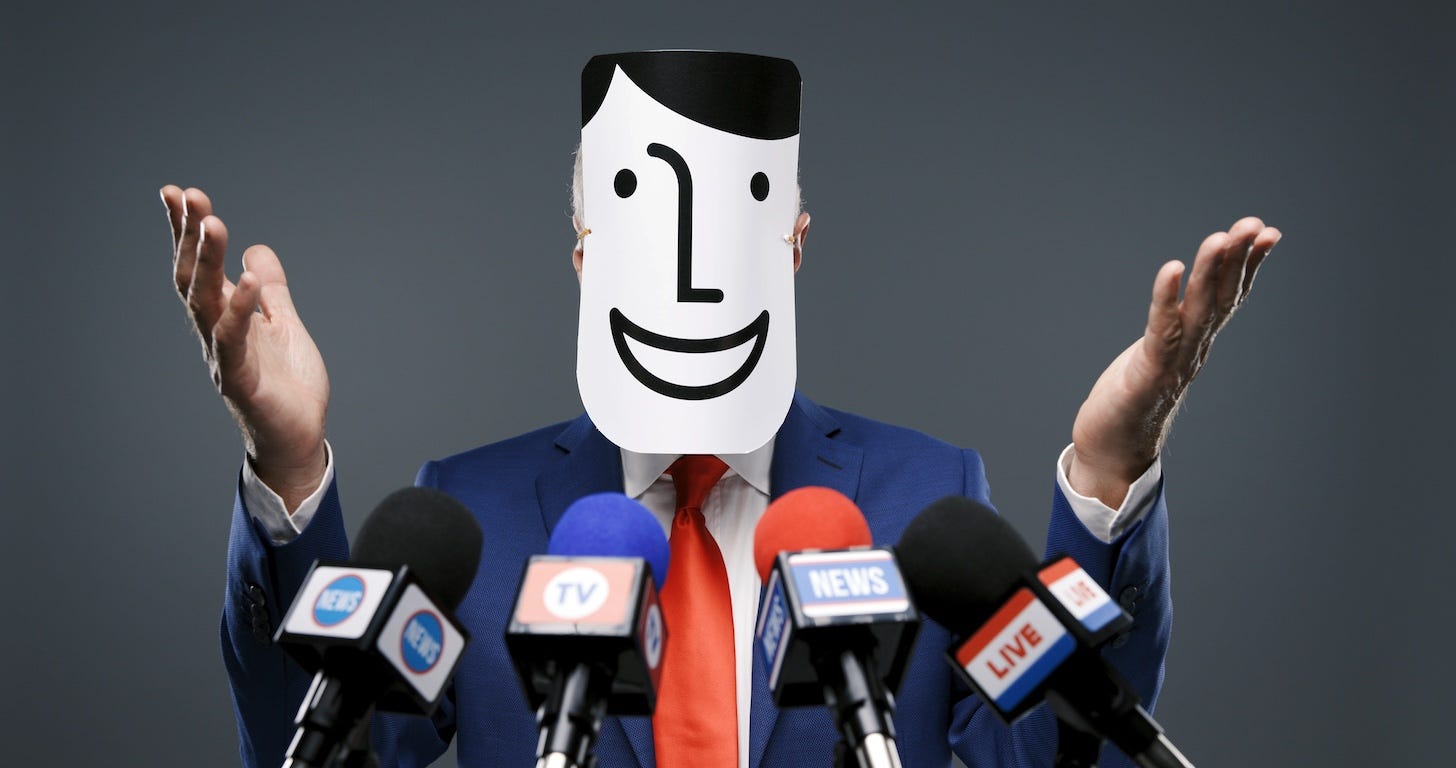
I was wondering what types of people would be most prevalent in self-censoring - politicians are the obvious example. So often a prominent politician retires, and when you later see them in public, you realise you are seeing what seems like a completely different person. I was at a lecture a few years ago in London given by Gordon Brown (former UK PM) and Julia Gillard (former Australian PM). I had the chance to chat with both afterwards, and Julia was so different to the persona we see on TV during her parliamentary term, as was Gordon. Both were super funny, relaxed, smart and passionate about the cause they were there to speak about.
How on earth some politicians keep their heads on straight is beyond me. I appreciate that some are so inculcated into the persona that they truly believe they are being their authentic selves, but seriously, surely most are aware of the deliberateness of the persona they project? How exhausting it must be.
I feel blessed today to have people around me I can be my authentic self. People I trust completely to maintain confidences, to whom I can be honest about how I am feeling.
When we drop the filter, as I can do with my friendship constellation, the relief is palpable. We move out of the tunnel vision and embrace life with a broad perspective, which inevitably is enlightening. Authenticity quite literally allows us to see more of the world.
Before we can build authentic connections, we need to acknowledge the walls we’ve constructed around ourselves. These barriers often feel protective, but they’re keeping us from the very thing we crave most: genuine human connection.
None of this is about radical transparency. But we must recognise that our self-censorship comes with a cost - energy, discomfort, our capacity to connect with others. There is a tax to pay when we are not ‘ourselves’.