


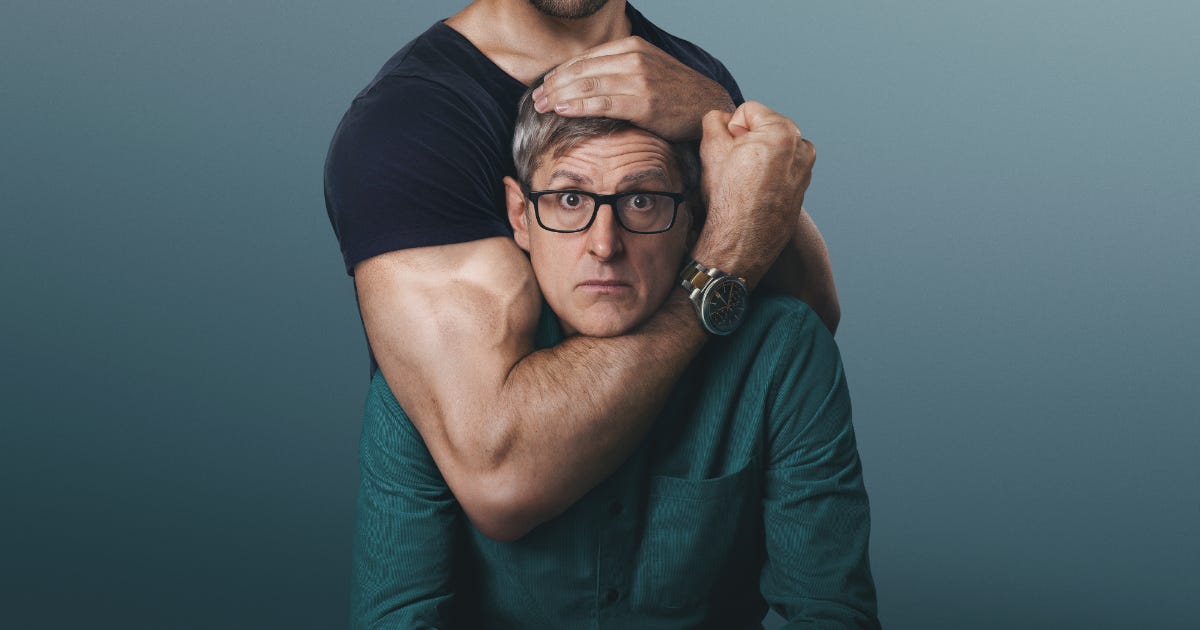
Louis Theroux’s documentary Manosphere is all over my socials at the moment, and many of my friends have watched it - as have I now. I had seen a bunch of clips on Insta and TikTok. so was a bit cautious, I knew it would probably upset me and reinforce my nagging suspicion that the world is going to hell in a handbasket. Watching rather confirmed that.
That’s why I sighed with relief with this article over my morning coffee today, ‘Guys Are Confessing How They Really Feel About The “Male Loneliness Epidemic,” And It’s Fascinating To Hear Such Different Perspectives On This‘.
“The answer is for men to support each other — resenting women and turning to right-wing grifters only makes the loneliness and isolation worse.”
A bunch of men were responding to a question posed on Reddit: “How do you feel about the ‘male loneliness epidemic?’ How have your friendships and community changed throughout your life and into your 30s?”
There are hundreds of thoughtful responses. I asked ChatGPT to help distill the responses, here’s what we came up with.
1. Many men feel the problem is real but misunderstood
Several commenters pushed back against the idea that loneliness only affects socially isolated or extreme groups. One of the early replies captured this sentiment clearly:
“People seem to equate male loneliness epidemic with incel culture… even perfectly normal average dudes and fathers are getting lonelier.”
The key point repeated across the thread was that loneliness is increasingly experienced by ordinary men with jobs, partners, and families, not just socially marginalised groups. For many commenters, the issue isn’t a lack of romantic relationships but a lack of meaningful friendships and community.
2. Male friendships tend to disappear over time
A common observation was how male friendships erode through adulthood. Patterns mentioned repeatedly:
Friends drift after school or university
Work and family consume most of the time
Men rarely rebuild social networks once they shrink
The feeling expressed was not dramatic loneliness, but a quiet thinning of social life.
3. Many men rely almost entirely on their partner
Another recurring theme was that men often place their entire emotional life inside one relationship. If that relationship ends, loneliness can be immediate and overwhelming. Typical pattern described by commenters:
Men stop investing in friendships once partnered
Their partner becomes their main emotional outlet
If the relationship ends, they realise they have no support network
This is why breakups, divorce, or widowhood often trigger sudden social collapse.
4. Men struggle to initiate emotional connection
Another theme was that men want connection but lack the social scripts for it. Many commenters described friendship interactions that stay surface-level:
talking about work
sports
hobbies
But rarely about:
stress
loneliness
mental health
life direction
As one commenter implied, many men don’t actually know how to move a conversation deeper without it feeling awkward.
5. Loneliness often shows up as boredom rather than sadness
Interestingly, several men didn’t describe loneliness in emotional terms. Instead, they talked about:
boredom
lack of social activity
absence of shared experiences
The language often sounded like:
Nothing to do with anyone”
Everyone’s busy with their families”
Hard to organise anything”
This suggests that for many men, loneliness appears as a lack of structure for connection.
6. Some commenters believe the “epidemic” framing is exaggerated
Not everyone agreed with the narrative. Some argued:
Loneliness affects both men and women
The issue is modern social fragmentation rather than gender
The phrase “male loneliness epidemic” oversimplifies the problem
Even those commenters often still acknowledged that many men struggle to maintain close friendships.
So what can we learn from all this? If we take a step back, the common theme is that men lose the infrastructure of friendship over time. Activities such as school, sport, and work used to provide that structure, supported by a relationship. When one or more of those pieces of scaffolding evaporate, some men don’t know how to recreate them. We men all too often don’t even have the language to start the rebuild. This is something that was rammed home to me when I started therapy six years ago after my long-term relationship ended.
Clinical psychologist Stephen Blumenthal, who has spent more than three decades working in male mental health, notes that men often arrive in therapy only after a partner insists. One patient described the idea of seeking help earlier as “like exposing my belly to my adversary without my armour on.”
There is also the challenge of what psychologists call “normative male alexithymia“ This is a learned inability to identify or vocalise emotions. If a boy is taught that showing feelings is shameful, he eventually stops recognising them in himself. Instead of saying he feels lonely or overwhelmed, he might experience chronic back pain, reach for an extra drink, or find himself driving too fast. The distress is real, but it is expressed through action rather than words.
To be a good human in this context means acknowledging the “double bind” men face: a society that tells them to open up, but often penalises them when they show genuine weakness. We reduce the shame of therapy not by demanding men change their nature, but by meeting them where they are.