


Monika Jiang wrote recently on her The Oneliness Project substack about returning to Berlin after an extended stay in Vietnam, and how life felt different there:
“Time feels different there. Not because people are less busy or work less hard, but because there seems to be spaciousness alongside the work. Perhaps because time doesn’t operate primarily through linear, Western logic, but moves through the cycles of the moon, the rise and set of each day, the rhythms of collective life, rather than the isolated individual one.”
I think I can relate. I have been going down a rabbit hole lately, the tiny house kind. Over the past year or so, I have been steadily clearing out the accumulated remnants of decades of living, and the more I clear, the more I find myself returning to something I think I have always believed: that I care more about people than things. I have never been particularly motivated by money; I am only motivated by what interests me and what I can become passionate about. I suspect that has cost me dearly financially over the years.
But it does clarify what the tiny house project is actually about. It is not austerity. It is stepping away from the idea that accumulation (of things, of trophies, of visible markers of success) says anything meaningful about a life.
That logic runs deeper than we think, though. It does not just govern our stuff; it governs our time.
As Edward T. Hall wrote in The Silent Language:
“Time with us handled much like a material; we earn it, spend it, save it, waste it.”
This linear, productivity-driven model creates a phantom pressure that follows us from the moment we wake up. You might find yourself checking your watch at 7:00 AM and feeling an odd sense of panic: it is early, but you already feel late.
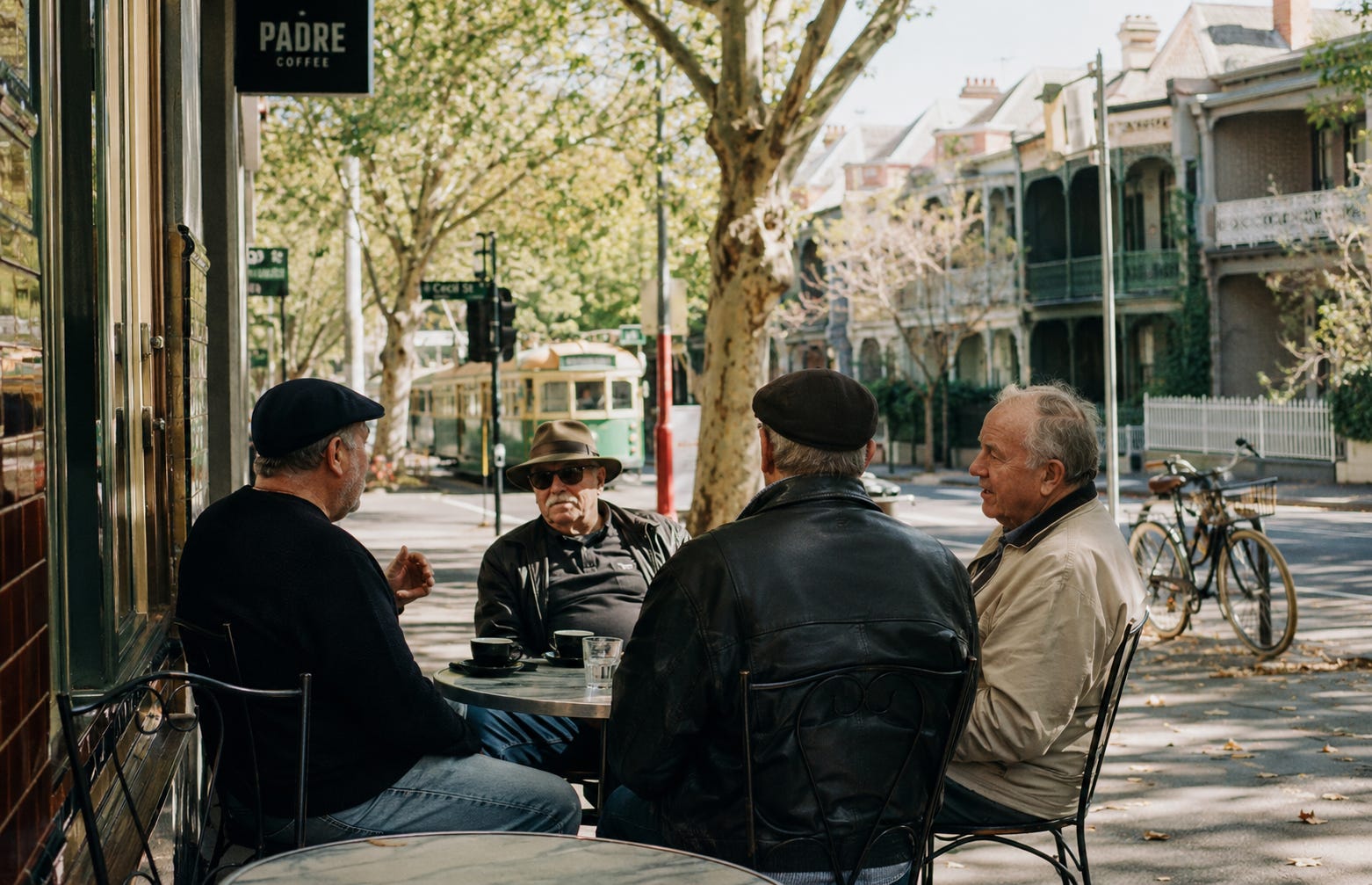
The term for this is chrono-colonialism: the gradual imposition of Western clock time on cultures with their own, more communal rhythms. Monika’s experience of Vietnam is the counterpoint: time there still bends around people rather than schedules. Community needs, rather than a spreadsheet, govern the day. A coffee stall is not just a caffeine fix; it is a “third place” where time is shared.
In The Dance of Life, Hall returned to this:
“Polychronic cultures are by their very nature oriented to people. If you value people, you must hear them out and cannot cut them off simply because of a schedule.”
When we live exclusively in a monochronic world, a spontaneous chat with a neighbour becomes an interruption to our “real” work. We schedule our friends weeks in advance, and the organic spontaneity that genuine connection requires quietly dies.
Byung-Chul Han, in The Scent of Time, put it plainly:
“Whoever tries to live faster, will ultimately also die faster. It is not the total number of events but the experience of duration which makes life more fulfilling.”
When time has no narrative or ritual, it becomes a series of disjointed points. We rush from one to the next but never feel we have arrived.
Living well might require something similar to what draws me toward the tiny house dream: less accumulation, more intention. The people in our lives are not a cost to our time. They are the reason for it.
Nobody ever felt less lonely because they were on time. Presence is a different kind of punctuality.
Read more like this
The Quiet Epidemic: How Loneliness Became a Public Health Crisis