


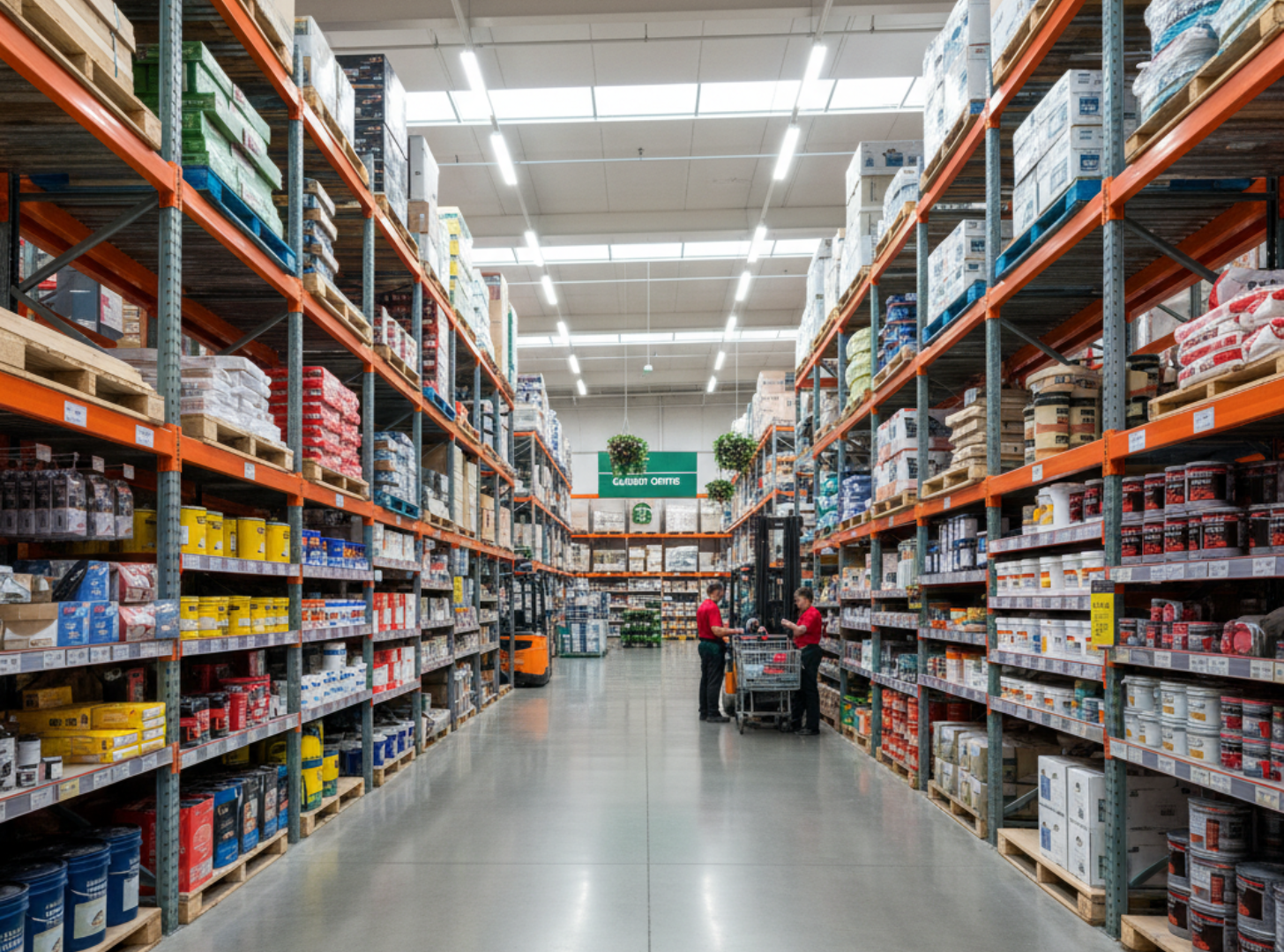
Don’t you just love a snag with all the trimmings from Bunnings? What I don’t love is the massive queue of cars inching their way down the service road into the Bunnings carpark. Although that probably serves me right for shopping on a Saturday morning. Come to think of it, why on earth does half the population of Melbourne all go shopping on a Saturday morning? It’s a throwback to restrictive trading hours, which were abolished in the 90s.
Bunnings really is huge; they stock pretty much anything you could ever need for your home renovations or DIY projects.
Yet so many of us persist in going to Bunnings when what we actually need is an orange. We look in the wrong place, or to the wrong person, for what we need. We need to accept that a specific person or situation cannot always fulfil our needs.
On the surface, it sounds ridiculous. If you want oranges, you go to the fruit shop or supermarket. We understand this logic perfectly when it comes to retail, yet we ignore it almost daily in our relationships.
You keep returning to the same person - perhaps a parent, a partner, a friend - hoping that this time they’ll have learned to listen differently. That this time they’ll notice you need gentleness, not solutions. This time, the conversation won’t leave you feeling like you’re speaking through thick glass.
The hardware store hasn’t changed. It still sells hammers, screws, and lengths of rope. It’s excellent at being a hardware store. But it does not, has never, and will not stock oranges.
You know this. On some level, you absolutely know this.
We often look at a person and see the seeds of what we need. We see their potential. We think: they have the potting mix, they have the plant pot, can’t I sow my seeds here, surely they should be able to give me what I need.
But of course, that’s not always true. So we stand in the hardware store getting angry that they won’t sell us an orange, even though, quite likely, they’ve spent years showing us indifference to our needs.
The frustration we feel is usually framed as a grievance against the other person. We call them cold or unavailable. But really, the fault actually sits with the shopper - with us.
The uncomfortable truth is that we must learn to recognise that the other person is a hardware store, not a fruit shop; we have to admit the failure, even when we might have invested years in the relationship.
It’s a slow erosion. We keep returning to the hardware store, slowly losing clarity about what we went there for in the first place. We start to question whether we ever wanted an orange in the first place.
We must recognise that wanting an orange is not unreasonable; it’s just that not every shop sells them.
A hardware store isn’t a failure because it doesn’t sell fruit; it’s just a hardware store. It’s useful for what it’s for. The problem isn’t their stock - it’s our expectation that one shop should meet every possible need.
Some people choose to shop in multiple stores to fully satisfy their needs for oranges. Others become loyal customers of a single shop. Maybe the hardware store has other items we also value. There’s no need to burn it down. But persisting in asking for oranges at a store that doesn’t sell fruit is a fool’s errand. It’s exhausting and draining for both you and the store.
There’s a joy to walking into a store seeking empathy and finding it on the shelf. There’s also joy in walking into a hardware store and asking for something they do stock. The resentment evaporates. We stop trying to shape the shop into something it isn’t.
The question isn’t whether you deserve oranges. You do.
The question is: where will you actually find them?