


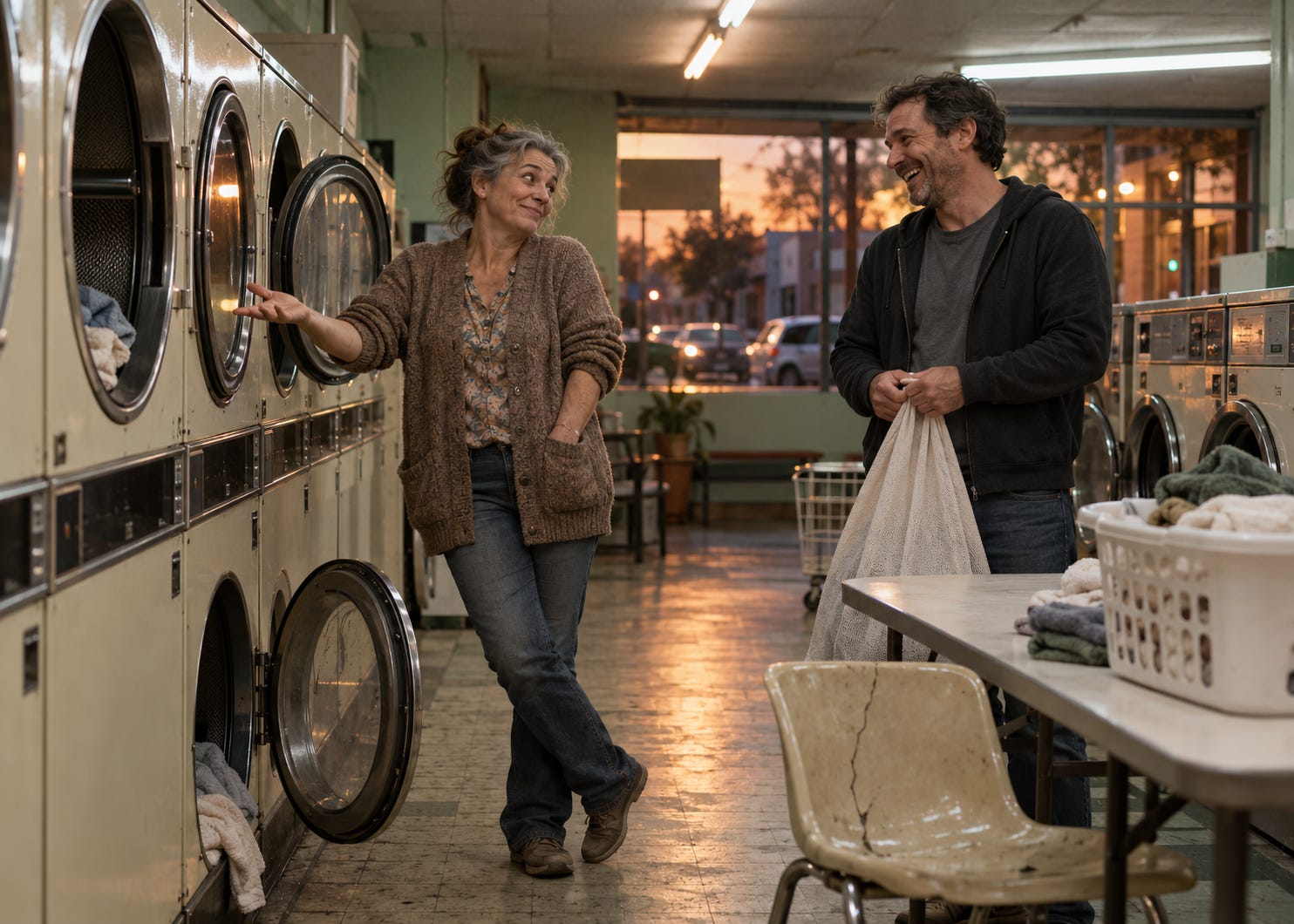
Anne Kadet was loading her washing into a dryer at a New York laundromat called Franklin Express when a regular named Tina came over and warned her not to put it on high, because it had scorched her sheets. Kadet wasn’t there for clean clothes. She writes a newsletter called Café Anne, and she picked Franklin Express because it was the worst-rated laundromat in the city: 2.2 stars on Google, with 77 of its 104 reviews giving it a single star, while the average New York laundromat manages a respectable four. The earlier part of her article covered a visit to a seriously wonderful-sounding laundromat, complete with a coffee shop and couches to recline on while waiting for your washing.
At Franklin Express, Tina let rip with a full medley of complaints, yet Anne also spoke with Anthony, who insisted that the machines actually did an ok job - although the attendant did admit they stop spinning from time to time. Anne was a trifle disappointed the place didn’t seem to live up to its awful ratings:
“I was hoping for more of a nightmare, if only for the sake of a good story.”
She then mused:
“The absence of pretense was extremely relaxing.”
I came across Anne’s Substack through Rob Walker, who writes The Art of Noticing and who recently talked with her about these worst-of outings (she has since gone hunting for the city’s worst bagel as well). Walker’s interest is attention, the idea that going looking for the worst version of something makes you look at it properly, which isn’t far from what I was getting at in The Power of Being Present.
In this case, being present meant Anne was willing to speak with people in the laundromat, and hear their stories - good and bad. If she had just done what most of us would do at the laundromat - likely go round the corner for a coffee or doomscroll - she wouldn’t have had the human interactions she did.
How many of us are happy to approach someone we don’t know without a reason? Are we worried about what to say? Gillian Sandstrom, a psychologist who studies conversations between strangers, said in an interview with Greater Good:
“We worry about talking to strangers because we feel like we don’t know what to say.”
For Anne, what had started as a silly mission in the hope of material for her Substack - to visit the worst-rated laundromat in New York - turned into an opportunity to meet new people and hear their stories. When Anne told Tina the reason for the visit, that opened the doors to conversation.
Anne wasn’t there to impress anyone, and in return none of the others in the laundromat tried to impress her either. Walking into the worst-rated laundromat in the city with no expectations beyond curiosity created a relaxed moment.
I wrote recently that real confidence doesn’t need an audience - another of Anne’s missions was to find New York’s most disappointing bagel - Anne is relaxed about her intent; nobody in Franklin Express was pretending, so she didn’t have to either.
Sandstrom’s other finding is the reassuring one:
“We enjoy it more than we think, and people like us more than we think.”
I’d like to think I’m the kind of person who chats easily to whoever is next to him in a queue, but I know better than to assume it. I’ll cheerfully chat with someone on the train or in the supermarket, even if I then wind up hearing their life story.
If you want to try it, look up the worst-reviewed café or fish and chip shop within walking distance, go, and when you get there tell whoever is behind the counter or beside you why you came. Most people who eat or drink somewhere regularly have an opinion about the place, and if Sandstrom is right, they’ll be happier to share it than you expect.