


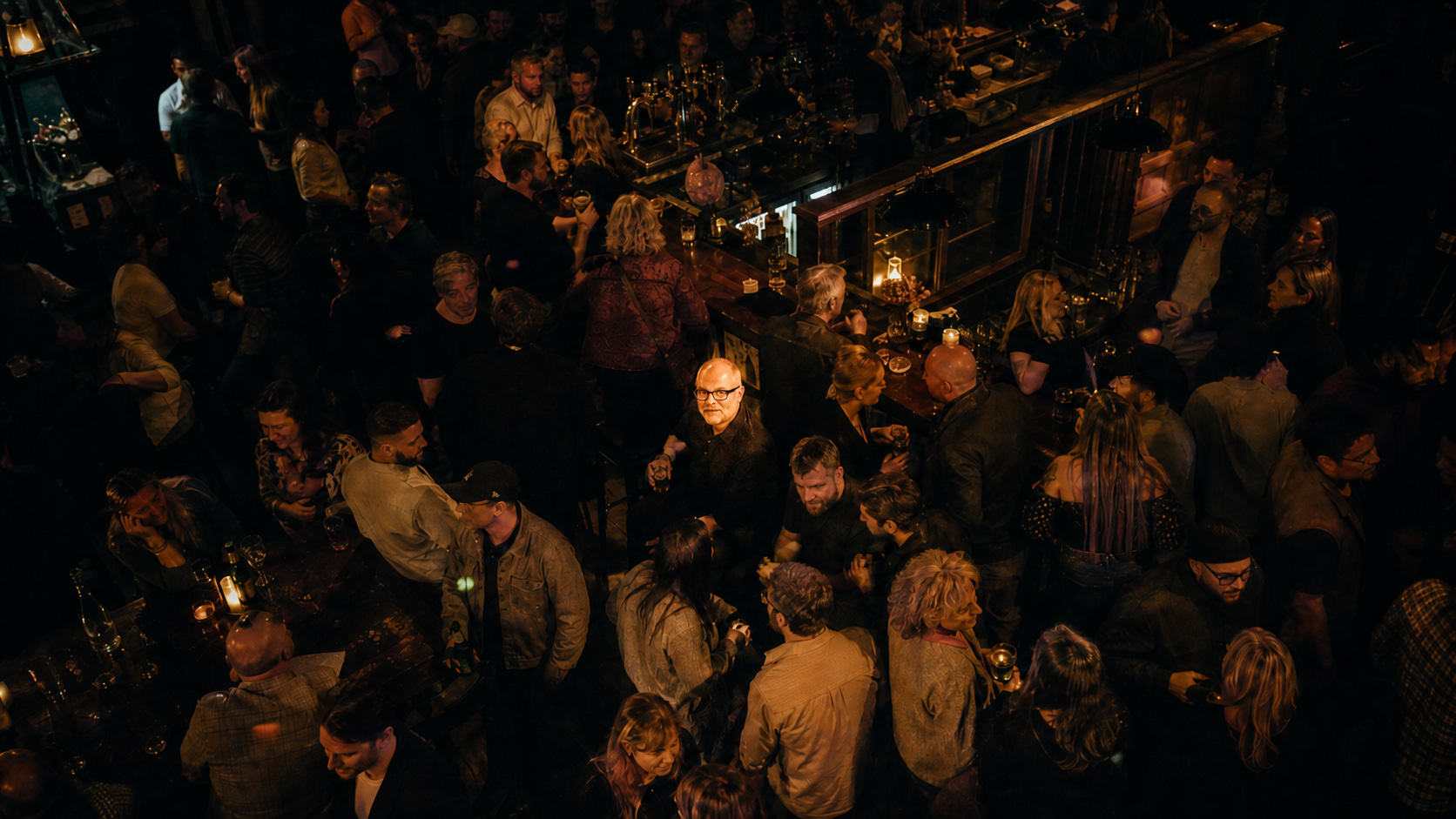
It is a specific, hollow sensation. You are seated at a dinner table or standing in a busy bar, surrounded by people who know your name and like your company. By any external metric, you are socially successful. Yet, as the laughter rises, you feel a sharp sense of being entirely alone.
We often treat loneliness as a numbers problem. We assume the cure is a larger contact list or more invitations. But for many, the issue is not a lack of people. It is a lack of resonance.
This “crowded loneliness” usually stems from the gap between the person we present to the world and the person we actually are. If you spend your time performatively socialising (moulding your opinions and energy to fit the group) you might be liked, but you will not feel seen. As Dr Brené Brown, a research professor at the University of Houston, observed in Braving the Wilderness:
“Because true belonging only happens when we present our authentic, imperfect selves to the world, our sense of belonging can never be greater than our level of self-acceptance.”
When we mask our true selves to maintain a large social circle, we are effectively abandoned by our own design. We are physically present, but emotionally invisible.
There is also a hard biological ceiling to this. Anthropologist Robin Dunbar found that humans can sustain roughly 150 stable relationships, but only about five sit in the innermost ring. These are the people we actually lean on when things go sideways. Spread yourself across fifty acquaintances, and you end up too thin to properly tend the handful who matter. We collect contacts. We lose closeness.
Technology has amplified this. We can now carry hundreds of digital connections in our pockets and mistake the noise for the real thing. As I wrote in Loneliness in a Hyperconnected World, one can be “alone in a crowded room.” The digital crowd makes it that much harder to escape.
This is not to say that large networks are useless. They provide “weak ties” that help with career opportunities and fresh ideas. However, they are not designed to hold the weight of our emotional lives.
If you feel lonely in a crowd, it is probably not the people. It is more likely the distance between who you are and what you are letting them see. Being genuinely known takes nerve. Most of us find it easier to stay behind the version of ourselves we have decided is acceptable.
The cure for crowded loneliness usually starts with a quiet pruning. It involves spending less energy on the many and more on the few. Most importantly, it requires the courage to stop performative socialising and start showing up as a person rather than a persona.
Who in your life would you feel comfortable being genuinely sad or unremarkable in front of? If the answer is “nobody”, no amount of dinner parties will fill the gap.
How much of your social life is spent maintaining a version of yourself that doesn’t actually exist?