


Was it you or them? Did you inadvertently offend them? Was it because they weren’t truly a friend but more an acquaintance? Losing contact with someone you counted as a friend can be disheartening. How do you react? Do you mourn, or do you just move on? I wrote recently about being ghosted by friends:
“They went quiet because vanishing felt easier than explaining, and they probably couldn’t put the reason into words, even to themselves.”
Compiling the invitation list for my 60th birthday party was an interesting experience, and it brought me back to this discussion about friends losing touch. My previous article was more about how it makes us feel when a friend disappears; I’ve also considered how, at the end of the day, friendships can have a shelf life:
“Most friendships don’t end in a screaming match, stomping of feet, and the protagonist striding away. More likely the opposite, there’s no great climax, no cinematic denouement, just a slow, silent receding of the friendship tide.”
My invitation list started with me scrolling through two lists. The first was a group of people I invited to drinks at my place last Christmas. The second was my WhatsApp – which gave me a bit of a jolt, because my WhatsApp messages are ordered by most to least recent. So the people I have messaged lately are at the top, and scrolling down takes me back in time to see names I haven’t talked to for weeks, months, or, in some instances, more than a year.
Similarly, looking at the Christmas list of maybe 30 people, I see names of people I have drifted away from and haven’t kept in touch with. Some are for good reason – at least in my estimation. I felt they’d taken different paths, diverging from mine. Notably, they also hadn’t maintained contact with me. So I can literally put dates on when those connections started to fade – the date/time stamps tell the story. Equally, there are new people in my life, who I’ve met in a variety of ways, and who I now am in touch with regularly.
But I’m drawn back to those who seem to have been lost by the wayside. I found myself wondering whether there was a kind of grief I should be feeling. Had I perhaps misjudged? Had I listened to the wrong people telling tales? There’s an ambiguity. Family therapist Pauline Boss spent decades with families living inside exactly this gap, and she gave it a name: ambiguous loss, a loss with no confirmation and no edge. Her research kept returning to the same finding: people in this position never get handed an ending. They have to build one themselves.
“Without a verified ending to their story of loss, family members and friends experiencing ambiguous loss are left to create their own ending.”
Reading this made me realise that perhaps I’ve been imagining the disconnections from those way down my message list. I’d hope I’ve not been the one to go quiet on a friendship, but maybe I have. We’re all responsible for letting something, or someone, fade away - maybe not deliberate avoidance, but at least not taking action when we should. If a friend seems to have changed in a way that you think is divergent from your life, why unilaterally ignore them? Why not seek to understand instead?
I need to remember that, from their perspective, I’m the one who has dropped off the planet; they don’t know whether my silence is intentional or accidental. The not-knowing is what causes the discontent. Maybe they’ve been scrolling their older messages as well, checking my socials to see what I’ve been up to? Seeing me tagged in photos with new faces rather than their own? None of that skulking around online will close the gap; it just adds evidence to their preconception because they don’t have the whole story.
Pauline Boss’s later work names this directly. When there’s no way to verify what happened, she and her co-author, Donna Carnes, argue the only real option left is to stop chasing verification and look for meaning instead.
“When working with ambiguous loss, we shift from the goal of closure to the search for meaning because there is no other choice.”
So if you’ve let go of a friend, they have to decide how much credence or weight to give to your disappearing. What if your name comes up when they are talking with a mutual friend? How will they frame an explanation in their own head? What would it be like for them if you showed up again a few months later acting as if nothing happened? Do you owe them an explanation? Is an apology necessary, or an explanation?
I suspect the real reason is likely messy and complex – we only have enough spoons to maintain a certain number of relationships; if the person was in the ‘Water Park’ of your friendship constellation, it might simply be that your energy was drawn elsewhere for a time. But I can understand if the person you reconnect with feels a range of emotions, including both resentment and relief.
Psychologist George Loewenstein has spent years studying what he calls the hot-cold empathy gap: the finding that people are consistently bad at predicting their own behaviour across emotional states.
“When people are in an affectively ‘cold’ state, they fail to fully appreciate how ‘hot’ states will affect their own preferences and behaviour. When in hot states, they underestimate the influence of those states and, as a result, overestimate the stability of their current preferences.”
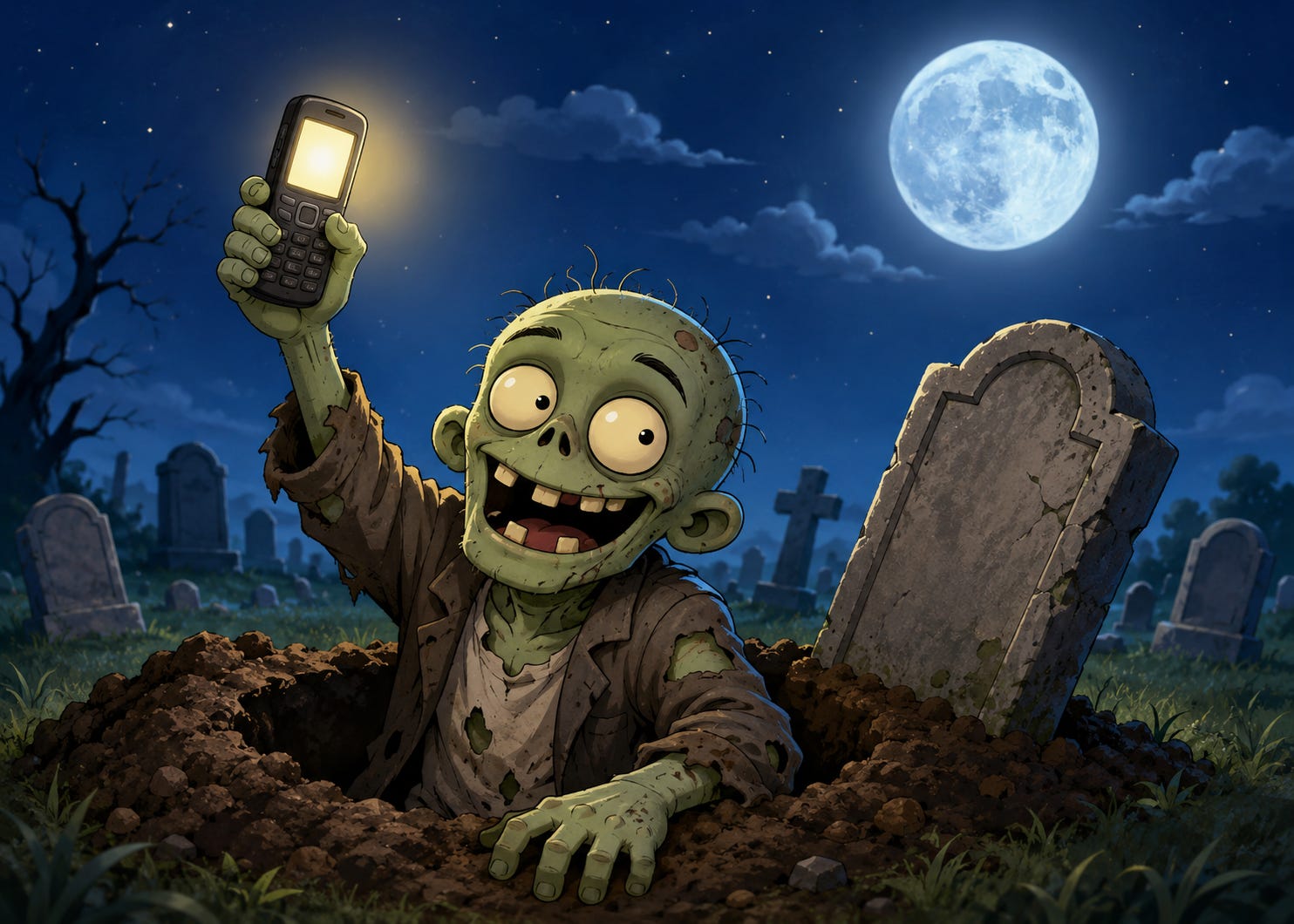
I took a punt on a number of ‘lost’ friends when making my birthday invitation list. Some have re-emerged; others haven’t responded to the invitation or a subsequent reminder. So reconnecting has gone a couple of different ways. They might have decided that no amount of explanation and apology will rekindle the zombie connection that’s resurfaced. But it looks like some of the friendships have survived a disappearance, and I hope they’ll be rekindled at the party. Others won’t, and that’s okay. It simply means the friendship, as it was, has ended. They are entitled not to reply now I have resurfaced; silence is fine for them, even if it is me who went silent first – and I need to live with that; they get to choose.
DO YOURSELF A FAVOUR
That was Molly Meldrum’s line, and it still holds up. You’re reading Alone Rangers for free, that’s not changing. But a paid subscription keeps it free for everyone else and puts a few dollars behind work that’s trying to say something true about loneliness and connection.
Read more like this
Ghosting, Fading, and the Unfinished Endings of Modern Friendship