


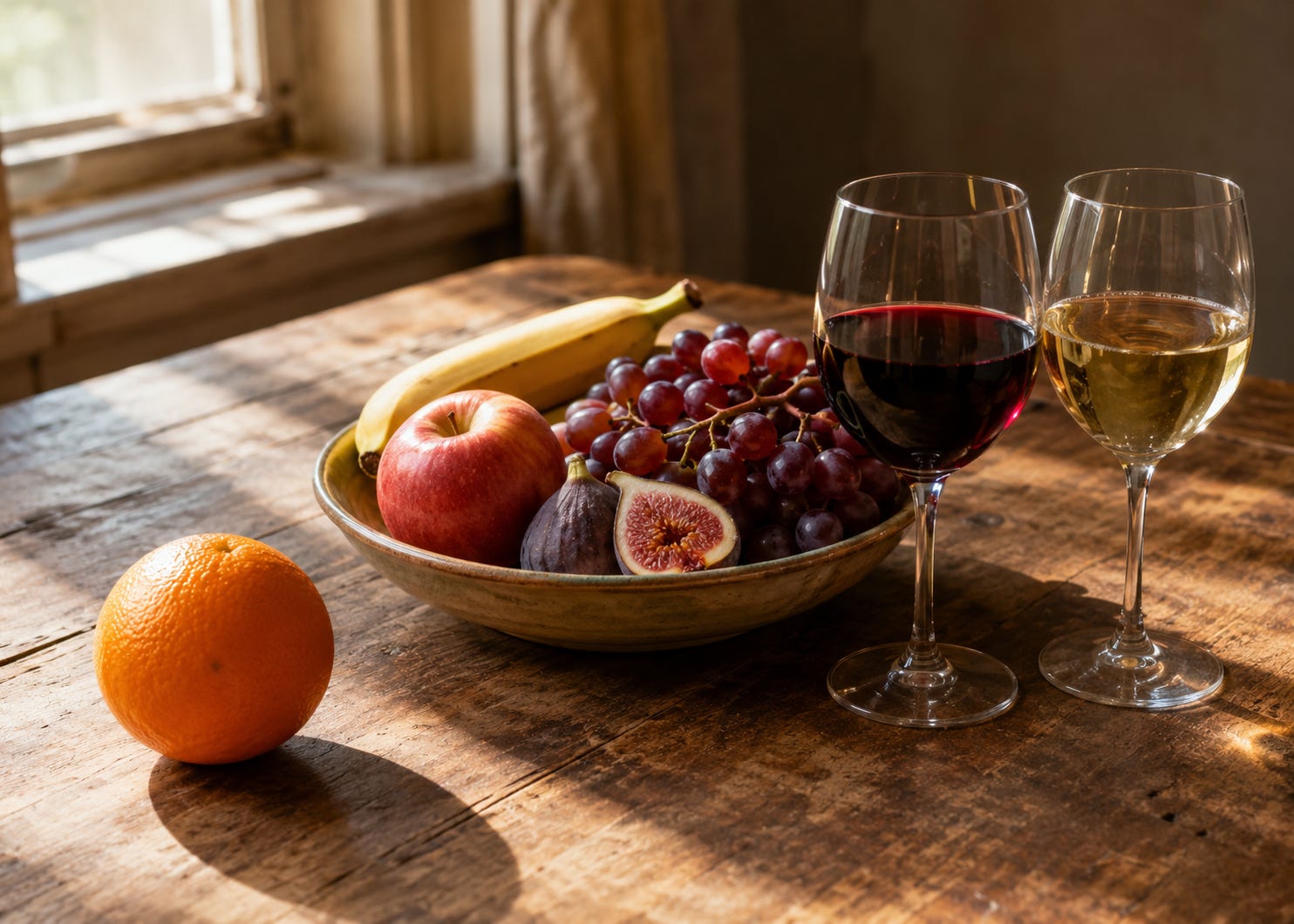
Tell someone who has spent a lifetime eating oranges that you also like bananas, apples, and the occasional fruit salad, and something close to panic can cross their face. It isn’t really about the fruit. It’s the question of what their own orange means if other fruit was possible all along, and whether their choice was ever really a choice at all.
If you have committed to only eating oranges for the rest of your life, and the other person stops liking oranges after a few years and wants to switch to mangos, where does that leave you?
The trade-off people are really defending is the security of one flavour against the freedom of a whole market, and the person holding the secure option often needs the other person to be missing something, rather than simply choosing differently. It’s a fair trade to make.
Plenty of people taste the whole market in their twenties and decide, deliberately, that one orange tended well is worth more than a bowl of things sampled once and forgotten. The mistake is treating that as the only correct answer, instead of one good answer among several.
David Rose, the character Dan Levy plays in Schitt’s Creek, drew a version of the same line with rather less fruit. Explaining his attraction to people of any gender to his friend Stevie, he works through the wines he’s tried: red, white, a rosé now and then, a merlot that used to be a chardonnay. Then he makes the point.
“I like the wine and not the label.”
The line carried the show’s pansexuality plotline for years, and as Newsweek noted when revisiting the scene, much of its power comes from how little it asks of the listener. Nobody has to defend a position. David just says what he likes, and the conversation moves on.
“Most of us are used to thinking of diversity in terms of what we consume: wine, food, Netflix, whatever, but we are not so versed yet in thinking about gender, sex and relationship diversity,” Silva Neves, psychotherapist and spokesperson for the UK Council for Psychotherapy, told Newsweek.
What I take from it goes wider than sexuality. Attraction, in whatever form it comes, is one question. How you choose to structure your life around it is a separate matter. Being drawn to more than one gender is fully compatible with a monogamous marriage. Equally, someone attracted to only one gender might grow into a marriage and, years later, realise that lifelong exclusivity isn’t the shape that suits them after all. The wine and the label were never the same argument, and neither are desire and structure.
Western culture treats monogamy as though it’s the only mature outcome, a kind of finish line everyone eventually crosses. There’s a word for that assumption: mononormativity, the idea that pairing off for life is healthier and more natural than any other arrangement, with everything else quietly filed under confused, greedy, or not ready to settle down.
I don’t buy it. Some people are built for one orange grove and tend it beautifully for decades. Others are wired for a fruit salad, and plenty manage both over a lifetime, moving through ethical non-monogamy, relationship anarchy, chosen family, or whatever arrangement suits the people involved, rather than the one they were handed at birth by family, culture or convention.
None of this is an argument against monogamy. If you’ve found your orange and you love it, good- keep it. My argument is with the idea that the orange is compulsory, that wanting variety is a character flaw rather than a preference, and that naming what you actually want requires an apology or an explanation from you to the rest of us, neither of which is required of you.
What you want doesn’t need anyone else’s approval, whether that turns out to be one orange for life, a rotating fruit bowl, or the realisation, well into adulthood, that you never much liked oranges to begin with.
Read more like this
Trying to Buy Oranges from a Hardware Store