


A couple of weeks ago, I wrote about how we stall on our own decisions, not because the choice is hard, but because we can’t stand the uncertainty of what comes next.
“None of us can see the future. We might make a decision, but there may be hidden information, an element of luck or external forces that, even if our decision seems sound, may still all fall apart. Alternatively, a shitty, reckless decision may pay off through sheer luck.”
But this plays the other way round as well, because most of us don’t just freeze on our own decisions. We also jump too quickly on other people’s. Not to take over, exactly, but to prevent something uncomfortable from happening to them. We smooth the path, absorb the friction, say the thing before the silence becomes too awkward. We tell ourselves it’s love.
The Anxious Overachiever put it plainly: we tend to mistake distress-prevention for love. And once you see it, you see it everywhere.
As parents, our natural instinct is to protect our child, but maybe we are jumping in before they have a chance to work it out on their own. Or, and I am so guilty of this, taking on a task from a team member because waiting for them to work through the task feels worse than just doing it myself. Or maybe we soften a hard truth for a partner or close friend because we love them and can’t bear to see them sitting with difficult news.=
Jonathan Haidt, in The Coddling of the American Mind, argues that this instinct, played out across a generation of parenting, has produced adults less equipped to handle ordinary adversity. His guiding principle is simple and well known:
“Prepare the child for the road, not the road for the child.”
It applies equally to anyone you’re leading or loving. When we over-function for others, fixing problems before they can attempt them, managing feelings before they can process them, we’re not being kind. We’re managing our own discomfort at their expense.
The harder truth is that emotional courage rarely looks dramatic. It usually looks like not doing something. Not jumping in, not explaining, not rescuing. Staying present while someone else sits with difficulty and finds their own way through it. Putting it plainly, sometimes we need to suck it up.
Brené Brown, in Daring Greatly, frames what that actually costs us:
“Vulnerability is not winning or losing; it’s having the courage to show up and be seen when we have no control over the outcome.”
It is only natural to want to share the load with someone we love. It’s tough watching them struggle with something difficult and unsettling. We can’t know how that struggle will resolve, yet intervening early is likely more for us than them.
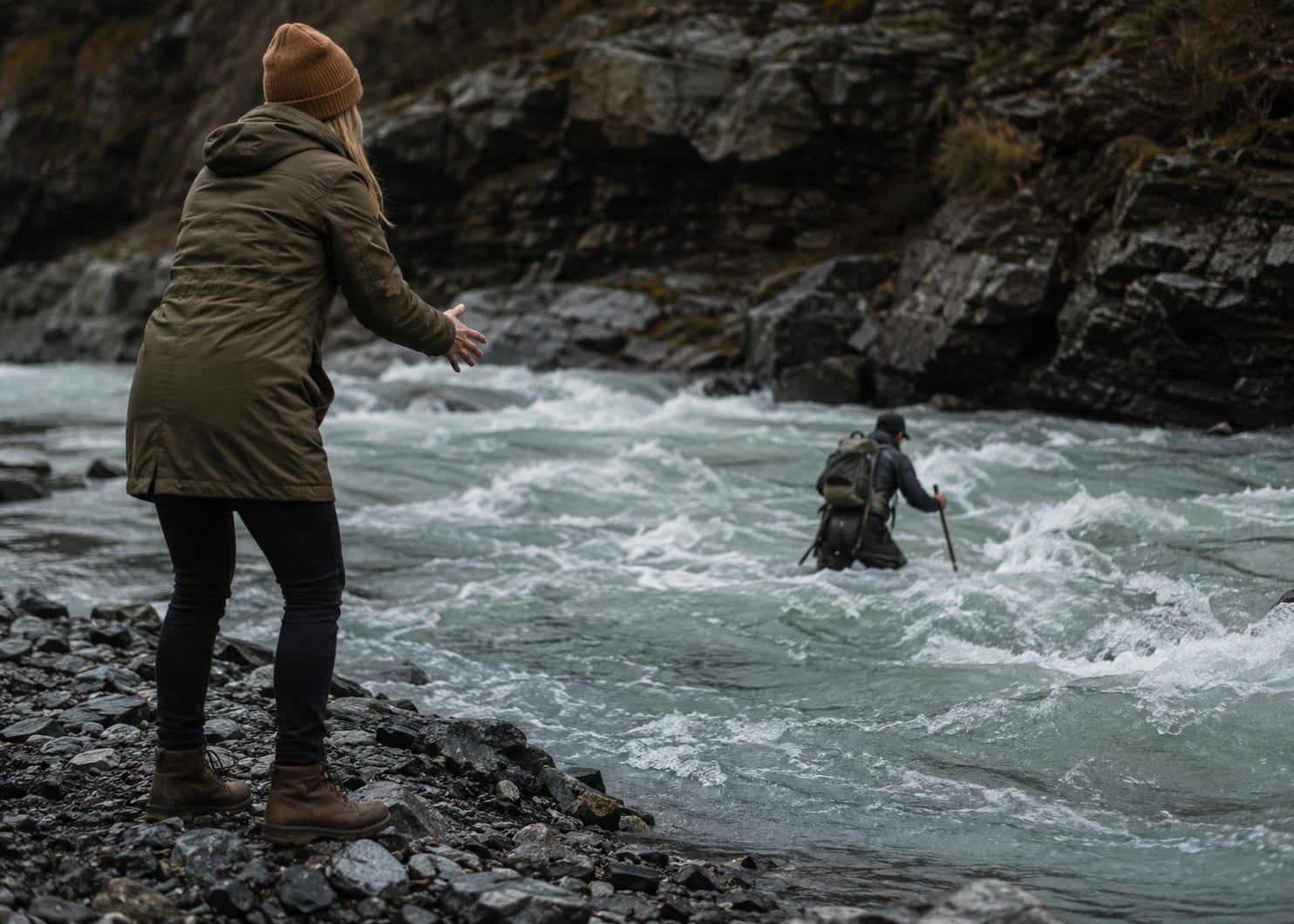
We must learn to notice the moments that we feel we must jump in and save our friend, resist the impulse to dive into the swirling waters - because it’s entirely possible we’ll both drown. It’s not up to us to fix something that isn’t ours to fix.
We must trust that our friend is capable of fighting their own battle and give them the space to resolve their conflicts. Usually, they are way more capable than we give them credit for.
Thanks David. A beautifully written reminder! 🙏