


I did actually go to a wedding a few weeks ago, the nephew of a close friend. But that’s the only nuptials I can recall attending for years. Nowadays there is a reality that hearing of someone I know passing away is more likely. It’s part of the cost of ageing; at nearly 60 I’m likely now older than more people than are older than me. The more likely invitation actually is to a divorce celebration; grey divorce is on the rise, couples splitting up in their 50s.
I’ve found my 50s a curious time in the sense of watching the dynamics of life changing around me. Death and divorce are more likely than weddings, but there’s no shortage of new beginnings - spending time with relatively new couplings as people emerge out of their long-term relationships, decide it’s time to move on, and recouple with someone new.
They don’t warn you of this transition. Some people I know are either fully or partially retired. One friend, fully retired, spends her days doing long-term house sitting, chasing the sun away from Melbourne’s winter. Another has moved from the suburbs to a large block of land on the green fringes.
For most of my compatriots, either our kids are fully launched, or even if living at home, they simply ship out at night as they grow into their adult independence. The school gate feels like eons ago, with its accidental daily contacts and manufactured friendships. Some make deliberate relocations to be closer to grandchildren or a quieter beachside or rural life. So many friendships don’t survive these transitions, unless considerable effort is expended on both sides; casual ‘let’s catch up for a wine’ conversations become a long-term diary exercise. Many people don’t bother, preferring to drift silently away from even previously strong connections.
I turned fifty a decade ago, and looking back I can see how much of my own social life at the time ran on infrastructure I never built and barely noticed, things like workplace proximity, my kids’ sport, a partnership that did a fair share of the social organising for both of us. Remove any one piece of that out, and you find out fast how little of the calendar you actually filled yourself.
I’ve written before about why adult friendship is hard at any age. Fifty just changes the arithmetic, because the natural replacements that used to arrive on schedule - another job, the start of a school year, a move to a new street - fade away.
Robert Waldinger, who directs the Harvard Study of Adult Development, puts the pattern plainly.
“It is no surprise to many adult Americans that social circles tend to shrink throughout our lives. We often find ourselves attending to fewer and fewer people as we commit to family and work while old friends move away or become busier in their own lives.”
Not all of that shrinking is a loss to mourn. Stanford psychologist Laura Carstensen has spent decades studying why older adults often report more satisfaction with fewer, closer relationships, describing
“...a developmental tendency for people to prune social networks as they get older and get rid of those people not particularly emotionally close or meaningful.”
There’s a big difference between who does the pruning, cutting ties with friends yourself, or when others sever the connections when you weren’t really noticing, or perhaps really valuing the power of the connections. Loneliness as we grow older is well documented and increasing. AARP’s most recent survey found roughly four in ten adults over 45 feel lonely, men more than women, and almost half of that group say they simply have fewer friends now than they did five years ago. Men are lonelier than women, caused by multiple influences including simply a lack of tools, and a previous reliance on their partners to schedule the social occasions into the diary - too many of us men having outsourced our social lives have never built the habit ourselves. It’s atrophy, not deliberate choice.
I find it reassuring that none of this calls for radical action; for most of us, we don’t need a detailed five-year plan or to install a new personality. Marisa Franco, the psychologist behind Platonic, is clear that friendship doesn’t need to mean finding a soulmate.
It can bring us a once-a-month lunch friend or a soulmate.
Starting small is perfectly acceptable and often preferred, and one doesn’t need to turn into the other. Age shouldn’t be an impediment; meeting people with shared interests can connect us wth people whose age is a decade or two either way of us; it doesn’t rely on having the same birth year, and actually might be easier to navigate.
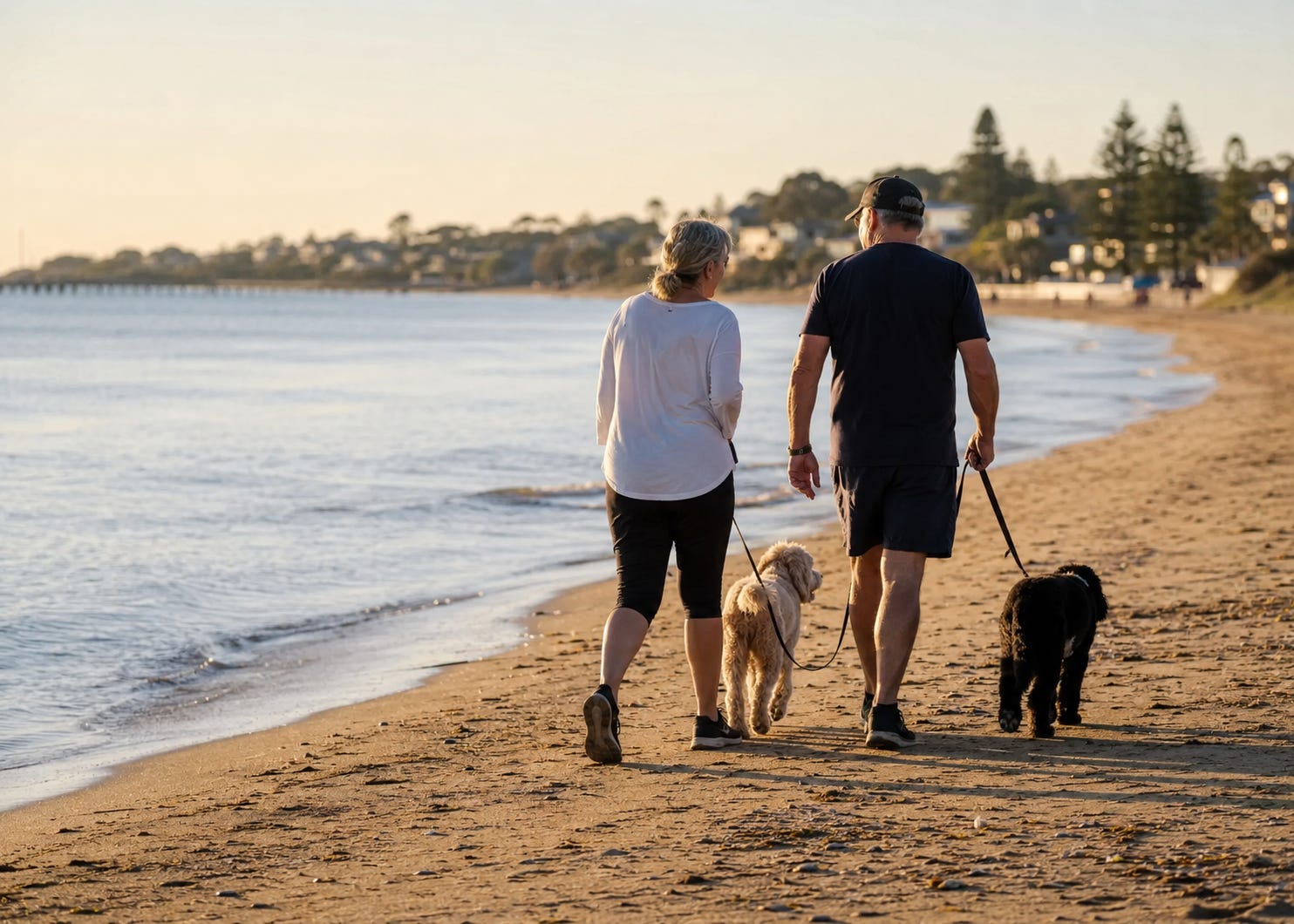
Rebuilding a social life after fifty tends to come down to one small move - perhaps putting ourselves in the same room with the same people more than once. I have a good friend whose friendship has built over a regular early morning walk with her dog. Or maybe calling a former colleague instead of just passively clicking the like button on their LinkedIn posts. I regularly volunteer with a couple of events around town, and have met all manner of diverse people and formed new connections.
None of this fixes a lack of friends overnight; this is a concerted campaign, full of small moments and decisions over time. But nobody but you can take those first tentative steps to create new friendships. There’s a bravery required; we are all scared of rejection, but maybe it’s time to pull on our big girl undies, make the phone call, send the message, join a group - because nobody else is going to do it for us.
Read more like this
The Work of Being an Older Human
The official job is gone.
The kids have moved out.
If your spouse is gone, too, there's that strange silence that fills the rooms.
You're so right, David. It's takes courage to build connection. But little steps forward work. And knowing that you're not the only one feeling that way helps.
I've just subscribed to alone Rangers. I'm looking forward to reading more.
Thanks for your thoughts!
I realised after my grey (green) divorce that I had no friends at all. They were all my ex's friends, and I was left to start again.
Thankfully, at that same time, I too started volunteering at local events and met my new tribe of wonderful people, including yourself!
Thank you for your friendship and your writing.