


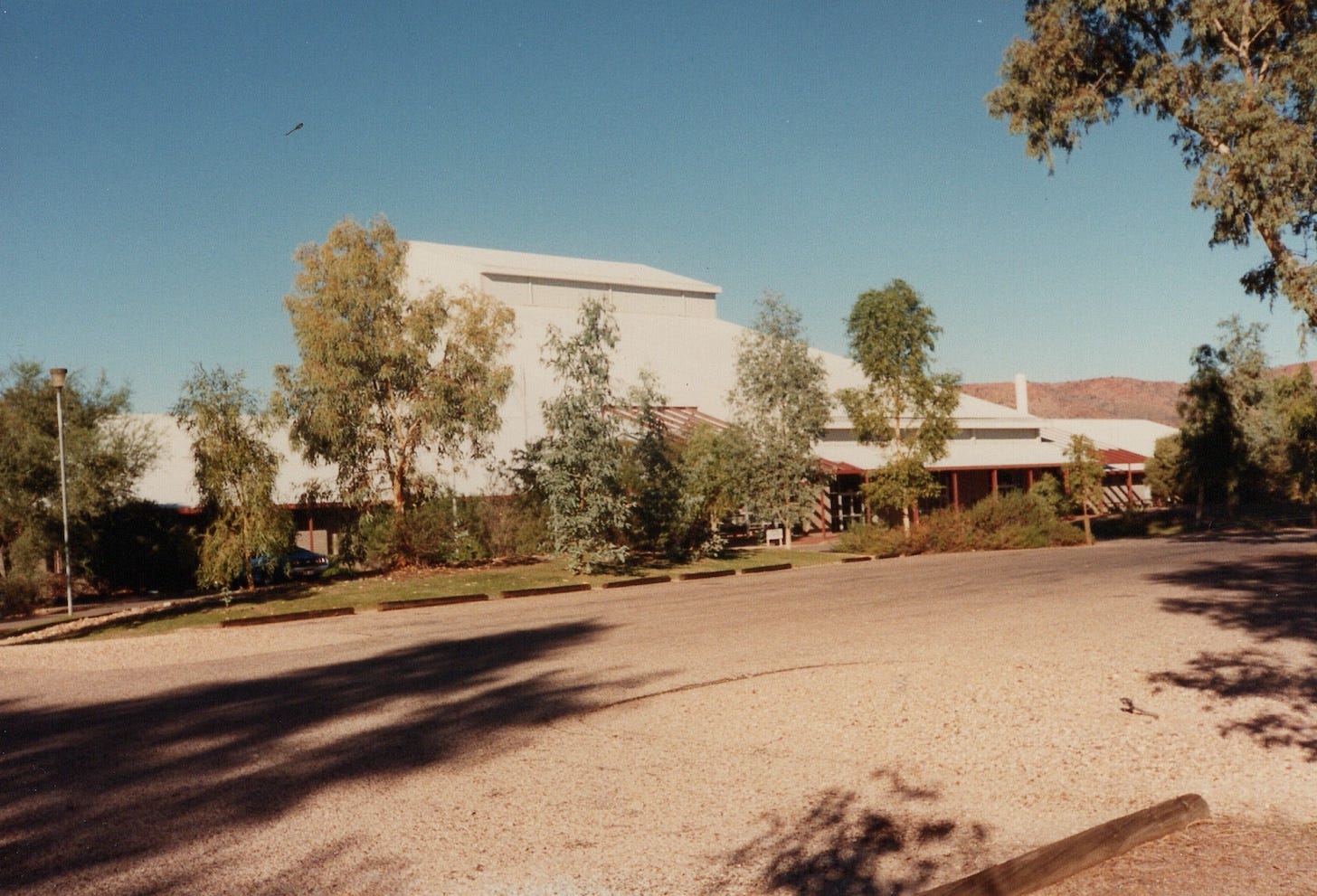
Sometime in 1989, I sat in the car park outside Araluen Arts Centre in Alice Springs, bawling my eyes out. I was 23 years old and had just finished two years working at the Arts Centre. It was pretty much my first full-time salaried role. Before that, I’d been a casual and contractor working in music, sound, and lighting production, mostly in Darwin.
I’d resigned because I’d got a new job that required me to move down to Ballarat in central Victoria, to work on the last stages of the renovation and reopening of the beautiful Victorian lyric theatre, Her Majesty’s Theatre. The Arts Centre held a going-away party with all the staff, and the director said lovely things about me.
The next few days were filled with all the usual preparations to move down south. My then-girlfriend, later my wife, and I packed everything up, loaded it into our little hatchback, and set off on the very long drive from the centre of Australia down to Victoria.
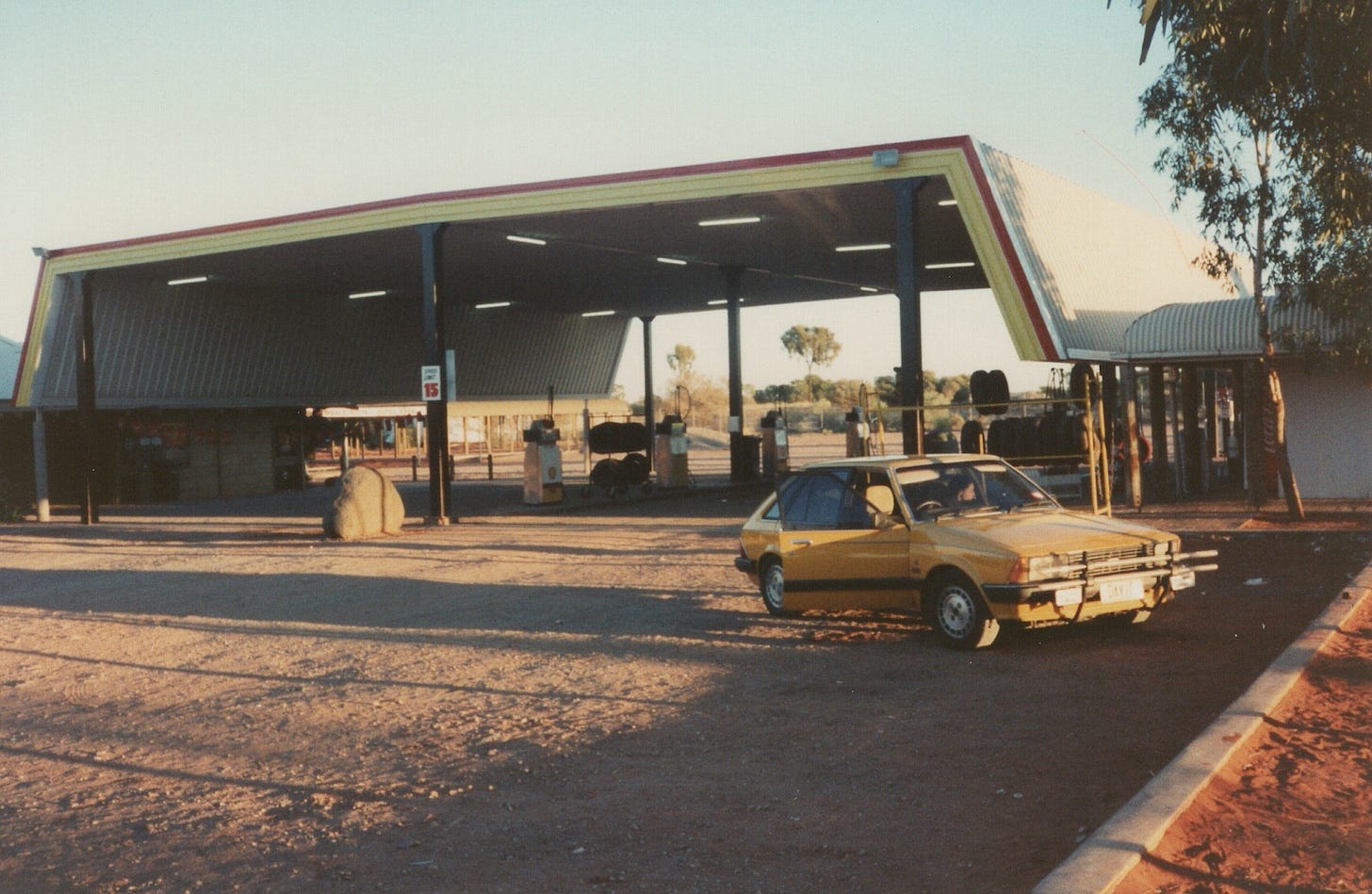
We arrived in Ballarat and were given a house on cheap rent from the local council, which owned the theatre, but we had no furniture or anything else to set up the house. I think we slept on the floor in sleeping bags for the first few nights before finally investing in a futon bed.
This was also my first experience of being involved on a building site, so there was so much to come to terms with: a new job, a new house, a new town. Oh, and Ballarat is really cold in winter compared to the heat of Alice Springs and Darwin that I was so used to, so it was quite a transition. We gradually filled the house with everything we needed, and I settled into my role, even if my office was a partitioned-off area of the men’s toilets in another of the council’s venues. Over time, this became our new normal.
There’s a name for that slide back to normal. Psychologists call it hedonic adaptation, and it’s why a promotion, a sale, or a finished project can feel enormous for a few weeks before it quietly becomes part of the furniture. I came across it recently in an Instagram carousel about Laurie Santos, the Yale psychologist whose free online course, The Science of Well-Being, has had millions of enrolments. Santos told Wisconsin Public Radio why we keep getting caught.
“Our minds lie to us about the kinds of things that make us happy.”
We picture the milestone and assume the feeling will stay once we get there, and when it fades, most of us reach for the next one and seldom stop to ask why the last wore off so fast.
The most famous example in this research is also the most often overstated. A 1978 study compared lottery winners with people who had been paralysed in accidents, and it’s often retold as proof that we bounce back from anything. That’s not quite what it found. The accident victims were in fact less happy than the comparison group, and later long-term work by Richard Lucas at Michigan State University found disability tends to bring a lasting drop in well-being. As Lucas told ScienceDaily,
“Happiness levels do change, adaptation is not inevitable, and life events do matter.”
Money isn’t the dead end it’s often made out to be, either, with a 2023 study by Matthew Killingsworth, Daniel Kahneman and Barbara Mellers finding that happiness keeps rising with income for most people. The treadmill is real, but it doesn’t flatten everything equally.
What interests me most is where other people fit. It’s easy to lump a relationship in with the bigger house, as though another person were just one more purchase that wears off. The research mostly points the other way. When Santos is asked what does work, her answer leans heavily on other people, along with helping others, gratitude, sleep, and exercise.
“Research shows that happy people are different in part because they just spend more time with other people.”
My guess is that connection holds up because you never get it once and keep it. A house is finished the day you move in, while a friendship has to be turned up again and again, a coffee one week and a phone call the next, each of them its own small event. It’s harder to get used to something that keeps arriving a little differently each time. I wrote recently about connection being the missing item on Jimmy Carr’s list, and this is a big part of why I think it belongs there.
None of this makes the milestones pointless. It just means the lift from reaching one will fade within weeks, and that’s normal rather than a sign something is wrong with you. What I’d do in those weeks, while it’s fading, is ring the people who helped you get there.
DO YOURSELF A FAVOUR
That was Molly Meldrum’s line, and it still holds up. You’re reading Alone Rangers for free, that’s not changing. But a paid subscription keeps it free for everyone else and puts a few dollars behind work that’s trying to say something true about loneliness and connection.