


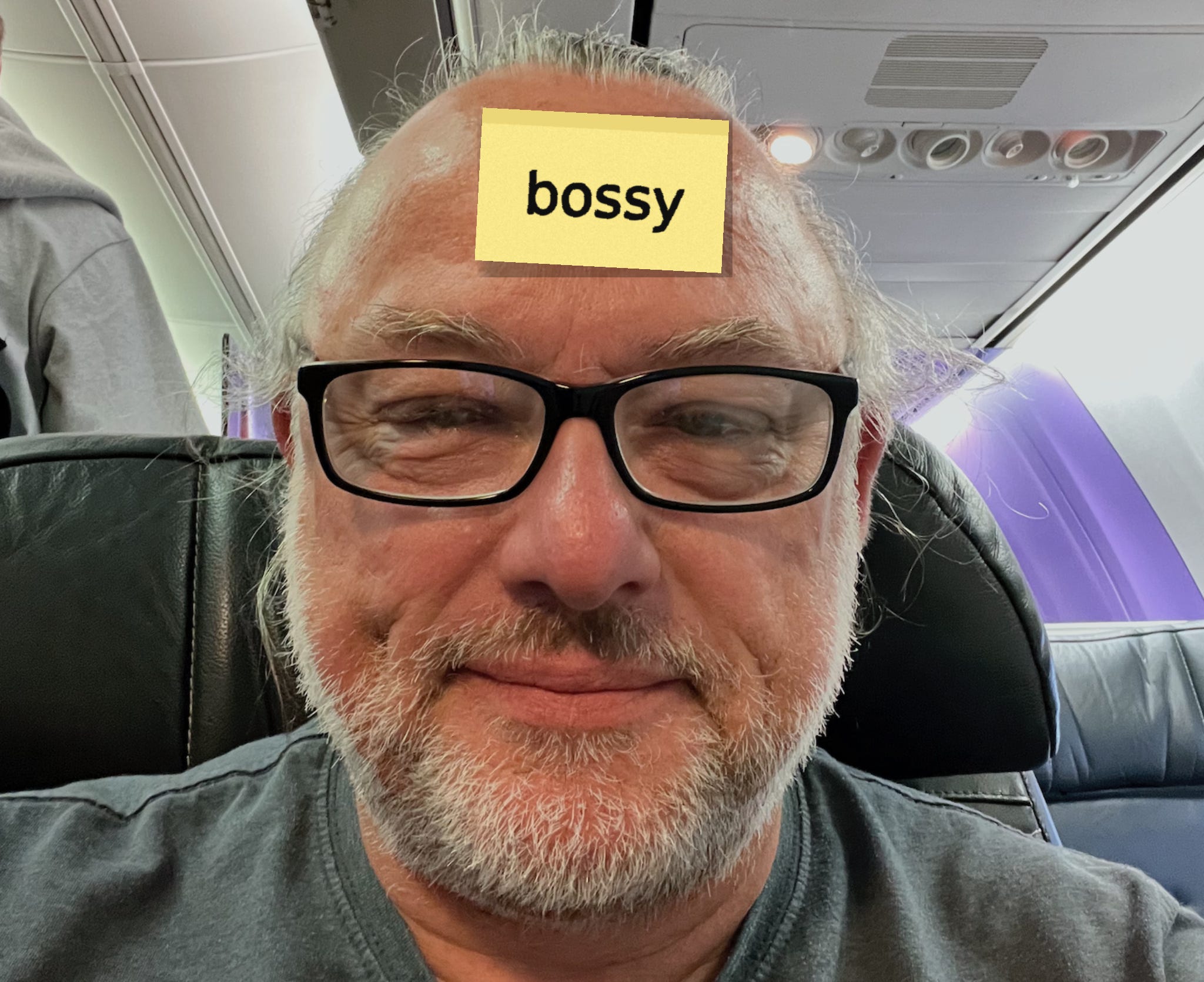
We’ve all done it. At work, you and your colleagues label your manager as ‘bossy’. We describe a child as ‘anxious’. We feel these adjectives are accurate; they categorise the people around us in a simple, understandable way. Labelling people like this gives us a quick and easy lens through which to filter the relationship.
And there is the pitfall: assigning the label is a thought-stopper. Once you decide your friend is a “narcissist”, you stop being curious about them. You stop looking for their capabilities and start scanning for evidence that confirms your diagnosis. This is what psychologists call “negative sentiment override“ - a filter that ensures you only see the worst in someone, even when they are trying to do better.
There is another cost to the adjective that is easy to miss. The label doesn’t just change how you see the person - it changes where you go looking for what you need. Once you’ve decided someone is cold, or withholding, or unreasonable, you have also decided what they owe you and why they are failing to deliver it. You keep returning to them with the same expectation, getting the same result, and calling it their fault. I wrote recently about the experience of trying to buy oranges from a hardware store - of persisting with a person or situation that has shown you, repeatedly, what it does and doesn’t stock. The adjective is often what keeps us in that queue. We aren’t just frustrated with the person. We have labelled them in a way that makes their limitations feel like a personal affront, rather than simply a fact about who they are.
Therapist Kathleen Smith, in her The Anxious Overachiever Substack, argues that the adjectives we use to describe the people we love reveal more about our own anxious focus than they do about the people we label. Words like fragile, sensitive, or difficult freeze someone in place - they treat personality as static, and ignore the patterns of action and reaction that both people are contributing to.
When we treat people as if these statements are true, we reinforce the behaviors that produce these statements in the first place. Treat a child like they’re very sensitive, and they tend to become more sensitive. Hide the truth from your worrying parents, and they’ll probably worry even more. We don’t cause these behaviors in others. They’re not our fault. But you do have to ask yourself, “What’s my part in all this?”
If you move through the world convinced that someone cannot cope, you will act accordingly and potentially intervene. If you label a child as fragile, you will naturally rush to rescue them. Your rescue then reinforces their belief that they cannot cope. The label creates a loop where everyone plays their assigned part, and no one gets to grow.
The question worth sitting with is not why they are like this, though that’s a start, but how am I adjusting myself because of the label I’ve assigned to them. Label someone selfish, and you probably won’t invite them to dinner. You let the label determine the relationship, and then wonder why the relationship never changes.
But here’s the uncomfortable part: the labelling itself is a way of avoiding responsibility. When I decide you are fragile, I have also decided that my rescuing is reasonable, even necessary. I never have to examine it. I’ve written about this before - the tendency we all have to monitor how other people’s behaviour affects us, while remaining genuinely blind to how our own actions ripple outward. Labelling someone keeps that blind spot intact. It gives us a clean story in which we respond to them rather than co-create the pattern with them.
You cannot force people to change their personalities. Maybe your partner has a very strong opinion on how to stack the dishwasher (I am totally guilty), but that doesn’t make you label them ‘bossy’. A ‘selfish’ friend may seem to be always talking about themselves.
What we can do is choose to stop reacting to the label and be curious, and listen and observe. When we shift from ‘they are always like this’ to ‘why are they like this’ we can start to see the patterns and understand why the person acts as they do.
We must break the nexus created by our labelling, and stop being stuck on the adjective. We don’t need the other person to be different, just for us to set aside the label and take responsibility for the relationship
Breaking that pattern doesn’t require the other person to change. It requires us to put the label down and pick up our own part of the dynamic. When we stop scanning for evidence that confirms the adjective, we sometimes find something we weren’t expecting - capabilities the label was hiding, or a clearer sense of what this person actually offers and what they don’t. That second realisation matters too. Some hardware stores are excellent. The problem was never that they didn’t stock oranges. The problem was the expectation we brought with us and the label we used to explain our disappointment.
Taking responsibility for the label - and for what we do with it - is where these questions get genuinely difficult. But it starts here, with a simpler discipline: noticing the adjective and asking what it’s protecting you from seeing.