


This is the tenth and final article in a series about ten qualities of a good human - dimensions of character to cultivate over a lifetime.
Alone Rangers is 50% off for Christmas!
This season, give the gift of reflection - to yourself or someone you care about.
Until New Year’s Day, all Alone Rangers subscriptions are 50% off. It’s the perfect time to dive deeper into the themes that matter: emotional resilience, modern masculinity, loneliness, and the quiet search for meaning in a noisy world.
I spent Christmas Day alone once, in Alice Springs in the 1980s. I was housesitting for a family who’d travelled south to Adelaide, and my main responsibility was looking after their enormous German Shepherd. A haemophiliac German Shepherd, no less, which meant daily pill administration by shoving medication down the dog’s throat whilst trying not to get bitten.
On Christmas morning, I roasted a chicken and sat quietly eating lunch in someone else’s house, 1,500 kilometres from the nearest capital city. At the time, it felt like loneliness. Looking back now, I think I see it differently. That Christmas gave me something valuable: the knowledge that I could be alone without falling apart. That solitude and loneliness aren’t the same thing.
That’s perspective. It’s not rosy hindsight that pretends difficult moments weren’t difficult, but the capacity to see a fuller picture than the one visible when you’re in the thick of something.
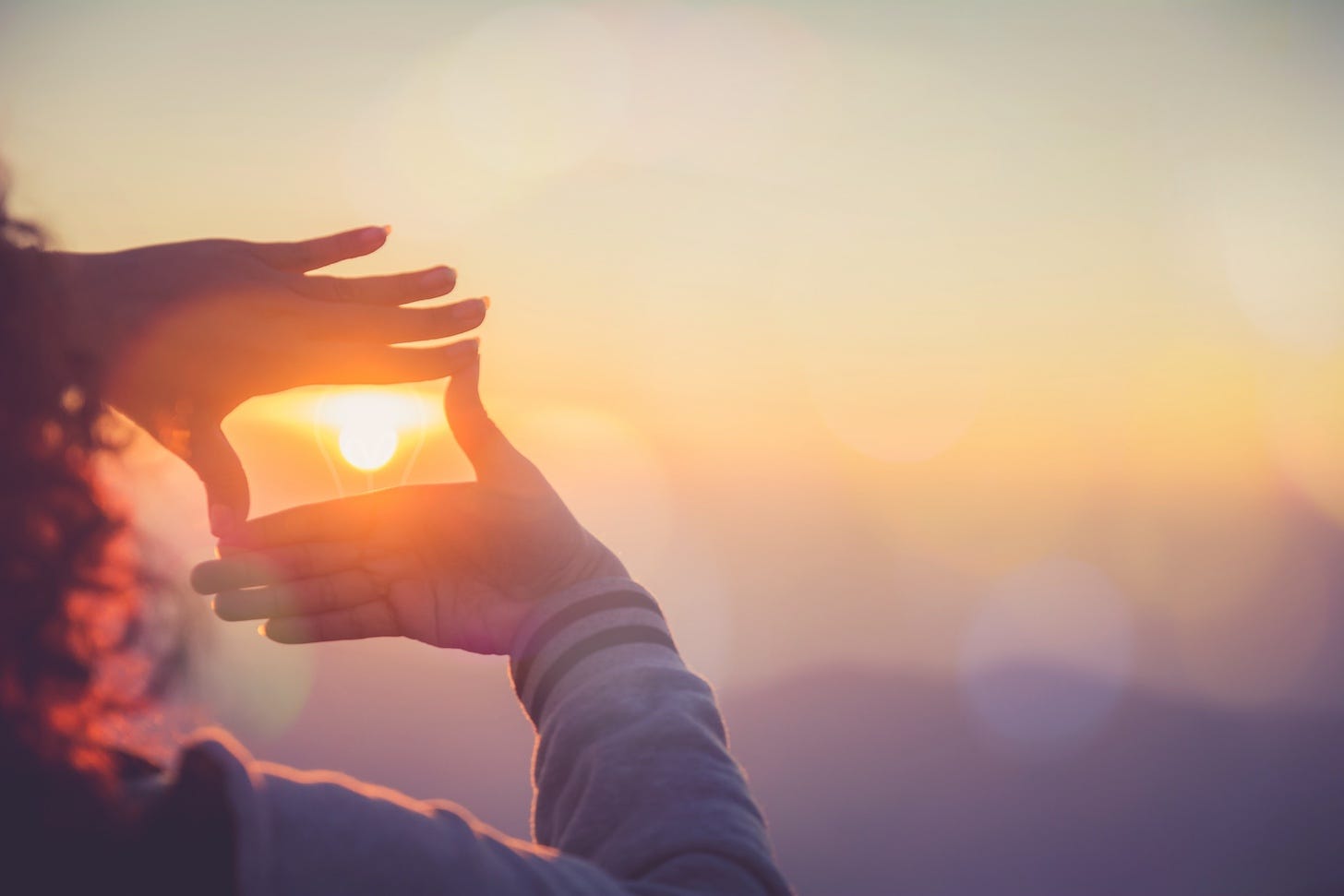
Perspective is like having a camera with a functioning zoom. You need to focus tightly on details when required, but you also need the ability to zoom out, to see how this moment fits into the broader landscape of your life.
I learnt this when my 23-year relationship ended six years ago. At 54, after half a lifetime with someone, every difficult conversation felt crushing. I was zoomed in so tightly on the immediate pain that I couldn’t see anything else.
Therapy helped zoom me out. For the first time in more than 50 years, someone actually sat me down, asked, “How are you feeling?” listened, and delved into each response. Through that process, I began to see that whilst this ending was painful, it wasn’t the end of everything.
When Perspective Feels Impossible
But the year after separation was the loneliest period of my life. I lost my social circle. I gained weight. I let go of my exercise routine. Then Melbourne’s extended COVID lockdowns arrived, and isolation became something measured in weeks and months. During that time, perspective felt impossible.
It was during this time that I started thinking about what we actually remember when we look back on our lives.
Maya Angelou was an American author and activist, especially well known for her autobiographical series, particularly “I Know Why the Caged Bird Sings” (1969), which chronicles her childhood and early adult experiences with racism, trauma, and self-discovery. She once said:
“Life is not measured by the number of breaths we take, but by the moments that take our breath away.”
I love this sentiment about treasuring breathtaking moments. But I also know that for those of us with early trauma, it’s not about the bad memories naturally fading - it’s about actively building enough good moments that we have something else to hold onto alongside the pain.
It’s also in the decisions we subsequently make, I remember the decision to start swimming laps again. The commitment to Pilates classes twice a week. The gradual realisation that I could rebuild my life - and through a variety of experiences early in the process coming to understand that there are so many options available to me.
I’m physically and emotionally a completely different person from six years ago. After years of buzz cuts, I now have long hair, usually tied back in a messy ponytail. My tattoo collection has expanded, including a phoenix I added last year. That symbol of new beginnings is literally marked on my body now. Oh, and I will confess to adding two more tattoos on this most recent Bali trip!
That transformation didn’t happen because I had perfect perspective during the difficult times. It happened because, eventually, enough perspective returned for me to take small steps forward. To remember that feelings are not permanent states.
The Quality That Makes All Others Possible
Writing this series has taught me something: perspective is the quality that makes all the others sustainable.
Without perspective, being present becomes overwhelming. Listening deeply turns into taking on everyone else’s problems. Living with purpose becomes rigid. Building authentic connections means every misunderstanding feels like betrayal. Living truthfully becomes brutal honesty without compassion. Lifting others becomes martyrdom. Taking responsibility means carrying blame for everything. Embracing change becomes impossible.
Perspective is the quality that helps us calibrate all the others. It’s the thermostat that prevents any single quality from overheating or running cold.
Choosing What Our Struggles Mean
Viktor Frankl survived Nazi concentration camps by maintaining perspective even in circumstances most of us cannot imagine - experiences he chronicled in his book Man’s Search for Meaning.
His central insight: we cannot always control what happens to us, but we can control how we respond. We can choose what meaning we make from our experiences.
“Everything can be taken from a man but one thing: the last of the human freedoms—to choose one’s attitude in any given set of circumstances, to choose one’s own way.”
Frankl wasn’t suggesting people be cheerful about suffering. He was pointing toward the human capacity to maintain perspective even when circumstances are unbearable, to see beyond immediate pain toward longer-term meaning.
Most of us will never face anything like what Frankl endured. But his insight applies to our struggles, too—the relationship ending, the loneliness, the weight gain, the feeling of being stuck. We get to decide what these experiences mean, how they shape us, and what we carry forward.
I spent my childhood moving between seven schools across two continents. From Surrey to Darwin, back to England for boarding school, then Darwin again, then Geelong Grammar for my final years. Other kids had roots. They’d walked to the same school for years.
I was always the outsider: the white pommy kid, bitten by mosquitoes in Darwin, the antipodean curiosity, good at swimming in England. Each move severed friendships before they could properly form.
Recently, I realised I’d been lonely my whole life, partly because of all those disruptions. I had no ongoing friendships from school or university.
But perspective allows me to see now that those constant transitions taught me independence and adaptability. They taught me that endings don’t mean permanent loss. That you can rebuild a connection, even when it feels impossible.
Would I have chosen an easier path? Absolutely. But I can hold two truths simultaneously: that experience was difficult and lonely, and it also gave me skills I use every day now. That’s perspective.
Practices for Maintaining Perspective
How do we actually maintain perspective when life is difficult? Here are practices that have helped me:
The Five-Year Test: When facing a difficult situation, ask yourself: “Will this matter in five years?” Not to minimise genuine problems, but to sort the truly important from the merely urgent.
The Volunteer View: I spent nearly 10 years as a Family Support Volunteer in the Emergency Department at the Royal Children’s Hospital. Working with children and caregivers facing genuine crises put my own problems in perspective.
The Physical Reset: When perspective feels impossible, sometimes you need to zoom out by changing your physical state. For me, that meant getting back into swimming and Pilates. Moving my body helped shift my mental state.
The Symbol Reminder: My phoenix tattoo serves as a permanent reminder that transformation is possible. That new beginnings emerge from endings.
One thing that’s helped me enormously is understanding that perspective often comes with time. I cannot count how many things that felt catastrophic at the time now seem like minor blips.
This doesn’t mean we should just wait for perspective to arrive. But it does suggest extending ourselves grace when we’re in the thick of something difficult. You don’t have to have a perfect perspective right now. You just have to trust that it will come.
Maintaining perspective gives us: the ability to hold pain and beauty simultaneously, to acknowledge difficulty whilst still seeing possibility, to stay grounded in what truly matters even when life gets complicated.
And perhaps that’s what being a good human ultimately comes down to: not perfection, but practice. Not having all the answers, but continuing to engage with the questions. Not avoiding difficulty, but choosing how we meet it.
Just as that solitary Christmas in Alice Springs wasn’t the end I feared but a beginning I needed, perspective allows us to see that our difficult moments are rarely the whole story.